
Root Canal vs Tooth Extraction: Which Option Is Better for Saving Your Tooth?
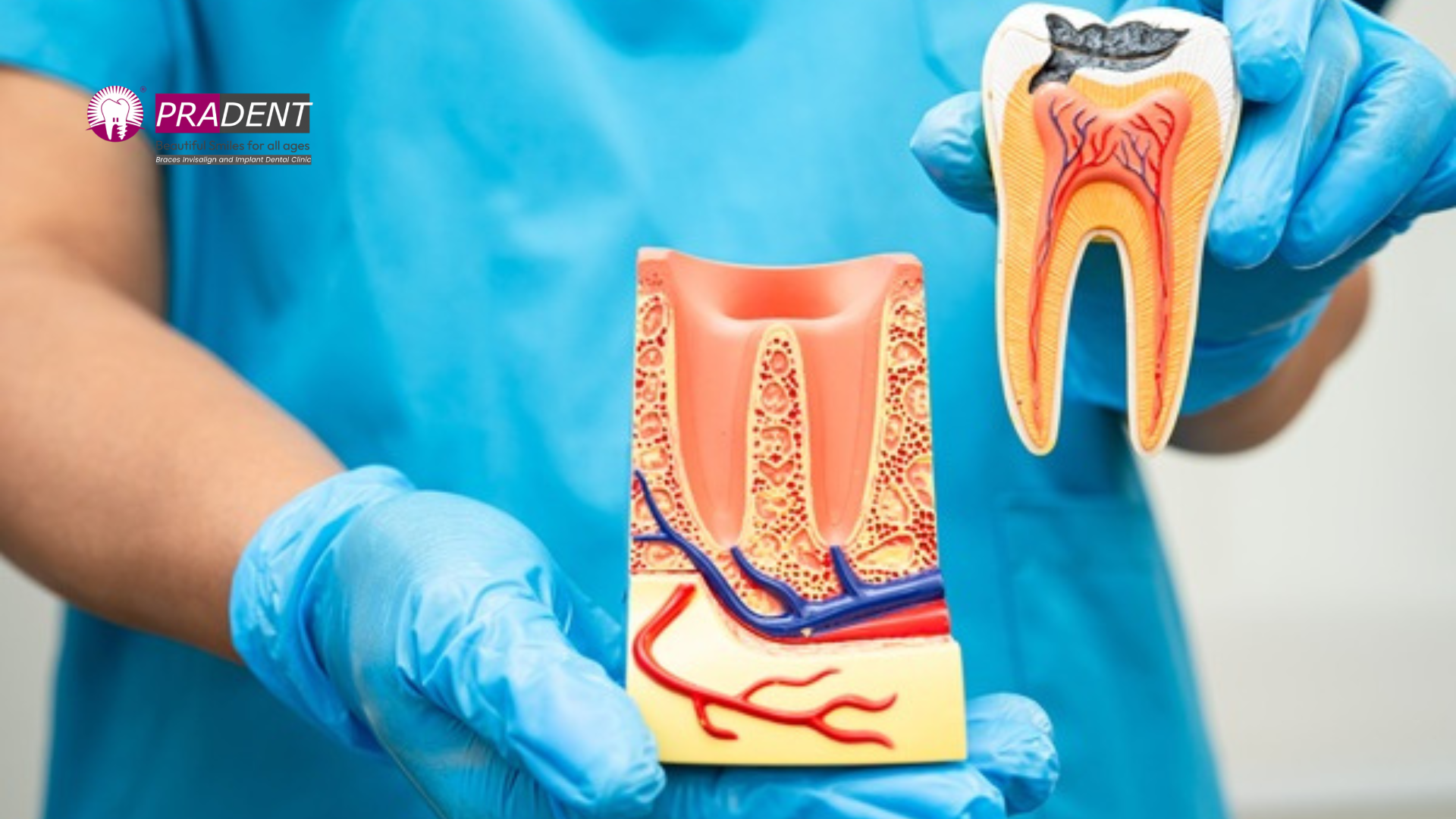
Few dental conversations cause as much hesitation as this one. When a tooth is badly decayed or infected, patients are often given two options, a root canal to save it, or an extraction to remove it, and asked to decide with limited context for what each path actually involves.
This blog breaks down how dentists actually make this call, what each procedure involves, and the factors that tip the decision one way or the other.
Why This Decision Comes Up
Both root canal treatment and extraction are used to resolve the same underlying problem: an infected or severely damaged tooth causing pain or at risk of causing further complications. The difference is that one preserves the natural tooth, while the other removes it entirely.
What a Root Canal Actually Involves
Root canal treatment removes infected or inflamed tissue from inside the tooth, cleans and disinfects the inner canals, and seals the space to prevent further infection. The natural tooth structure remains, typically protected afterward with a crown for long-term strength.
The Root Canal Process, Step by Step
- Local anaesthesia to numb the area completely
- Removal of infected or damaged pulp tissue from inside the tooth
- Cleaning and shaping of the root canals
- Sealing the canals to prevent reinfection
- A crown placed afterward to restore strength and function
What a Tooth Extraction Actually Involves
Extraction removes the entire tooth, usually recommended when the damage or infection is too extensive for the tooth to be reasonably saved, or when other factors make root canal treatment impractical.
The Extraction Process, Step by Step
- Local anaesthesia to numb the surrounding area
- Loosening and removal of the tooth from its socket
- Guidance on managing the healing socket afterward
- Discussion of replacement options, such as an implant or bridge
How Dentists Decide Between the Two
Extent of the Damage
If enough healthy tooth structure remains and the infection hasn’t compromised the root excessively, a root canal is usually the preferred option. Severely fractured or decayed teeth, especially below the gumline, may not have enough structure left to restore.
Position of the Tooth
Front teeth and teeth with high visibility or bite function are more often prioritised for saving, given their role in appearance and chewing.
Bone Support Around the Tooth
Advanced gum disease that has significantly weakened the bone around a tooth can make root canal treatment less viable, even if the tooth’s interior could otherwise be saved.
Overall Oral Health and Patient Factors
Certain medical conditions, difficulty accessing the canal due to tooth anatomy, or a tooth that has already failed a previous root canal can shift the recommendation toward extraction.
As a general principle, dentists prioritise saving a natural tooth whenever it’s structurally and medically viable, since no replacement fully matches the function of a natural tooth.
Root Canal: Advantages and Considerations
- Preserves your natural tooth and bite alignment
- Maintains jawbone stimulation from the natural root
- Usually completed in one to two visits
- Requires a crown afterward for long-term durability
- Not viable if damage or infection is too extensive
Extraction: Advantages and Considerations
- Resolves infection or damage completely and immediately
- Often necessary when a tooth cannot be structurally saved
- Leaves a gap that ideally needs replacement to prevent shifting and bone loss
- Typically requires a follow-up plan for an implant, bridge, or denture
Common Misconceptions
“Extraction is always cheaper, so it’s the better option”
Extraction alone may cost less upfront, but factoring in the eventual cost of a replacement tooth, an implant, bridge, or denture, root canal treatment combined with a crown is often comparable, while also avoiding the complications of an untreated gap.
“Root canals are extremely painful”
With modern anaesthesia and techniques, most patients report the procedure itself feels similar to getting a routine filling, the pain people associate with root canals usually comes from the infection beforehand, not the treatment itself.
“If the tooth doesn’t hurt anymore, it doesn’t need treatment”
Pain subsiding can sometimes mean the nerve has died, not that the infection has resolved. This is often mistaken for improvement when the underlying problem is actually progressing.
What Happens If You Delay the Decision
Putting off treatment, whichever direction you eventually choose, allows infection to continue spreading, potentially reducing the chances of successfully saving the tooth and increasing the risk of the infection affecting surrounding bone and tissue.
Root Canal and Extraction Options in Katraj and Ambegaon
Deciding between saving a tooth and extracting it is easier with a dentist who can properly evaluate the tooth’s structure, the surrounding bone, and the extent of infection in person. For residents of Katraj and Ambegaon, having this evaluation done locally means faster diagnosis and a quicker start to treatment, which matters when an infection is involved.
Pradent Dental Clinic provides both root canal treatment and extractions, along with tooth replacement options like implants and bridges, for patients across Katraj, Ambegaon, and the surrounding parts of Pune. Whether you’re searching for root canal treatment near Katraj or considering an extraction and replacement plan in Ambegaon, a detailed evaluation, including an X-ray of the affected tooth, is the right first step to understand which option genuinely fits your case.
Patients across Katraj, Ambegaon, and nearby areas of Pune can schedule an evaluation at Pradent Dental Clinic to determine whether a root canal or extraction is the better option for a damaged or infected tooth.
FAQs — Root Canal vs Extraction
Is a root canal always better than extraction?
Not always. Root canal treatment is generally preferred when the tooth structure and surrounding bone are healthy enough to support it, but extraction may be necessary when damage is too extensive.
Does a root canal hurt more than an extraction?
Both are performed under local anaesthesia and are generally comparable in terms of procedural discomfort. Recovery experience varies more by individual case than by procedure type.
What happens if I choose extraction instead of a root canal?
You’ll typically need to plan for a replacement, such as an implant or bridge, to prevent shifting teeth and bone loss in the gap.
Can every tooth be saved with a root canal?
No. Teeth with extensive structural damage, severe bone loss, or certain anatomical complications may not be good candidates for root canal treatment.
Where can I get a root canal or extraction near Katraj or Ambegaon?
Pradent Dental Clinic offers both root canal treatment and extractions, along with replacement options, for patients across Katraj, Ambegaon, and surrounding parts of Pune.
Conclusion: Let the Evaluation Guide the Decision
There’s no universally “better” choice between a root canal and an extraction, the right option depends entirely on the condition of the specific tooth, the surrounding bone, and your overall oral health. As a general rule, saving a natural tooth through root canal treatment is preferred whenever it’s a viable option, since no replacement fully replicates a natural tooth’s function.
If you’re facing this decision, the most useful next step is a thorough evaluation rather than guessing based on cost or fear of the procedure. Patients across Katraj, Ambegaon, and the wider Pune area can get that evaluation at Pradent Dental Clinic, with a clear recommendation based on your tooth’s actual condition.