Braces vs. Aligners: Which Is Right for You?
If you’re considering orthodontic treatment to get a straighter, more confident smile, you’ve likely come across two popular options: metal braces and clear aligners. Both are designed to align your teeth and correct bite issues, but each comes with unique benefits, challenges, and considerations.
At Pradent Dental Clinic, Katraj, Pune, Dr. Prachi Adsul (MDS Orthodontist) specializes in both conventional braces and modern aligner therapy, helping patients choose the best treatment tailored to their needs.
What Are Metal Braces?
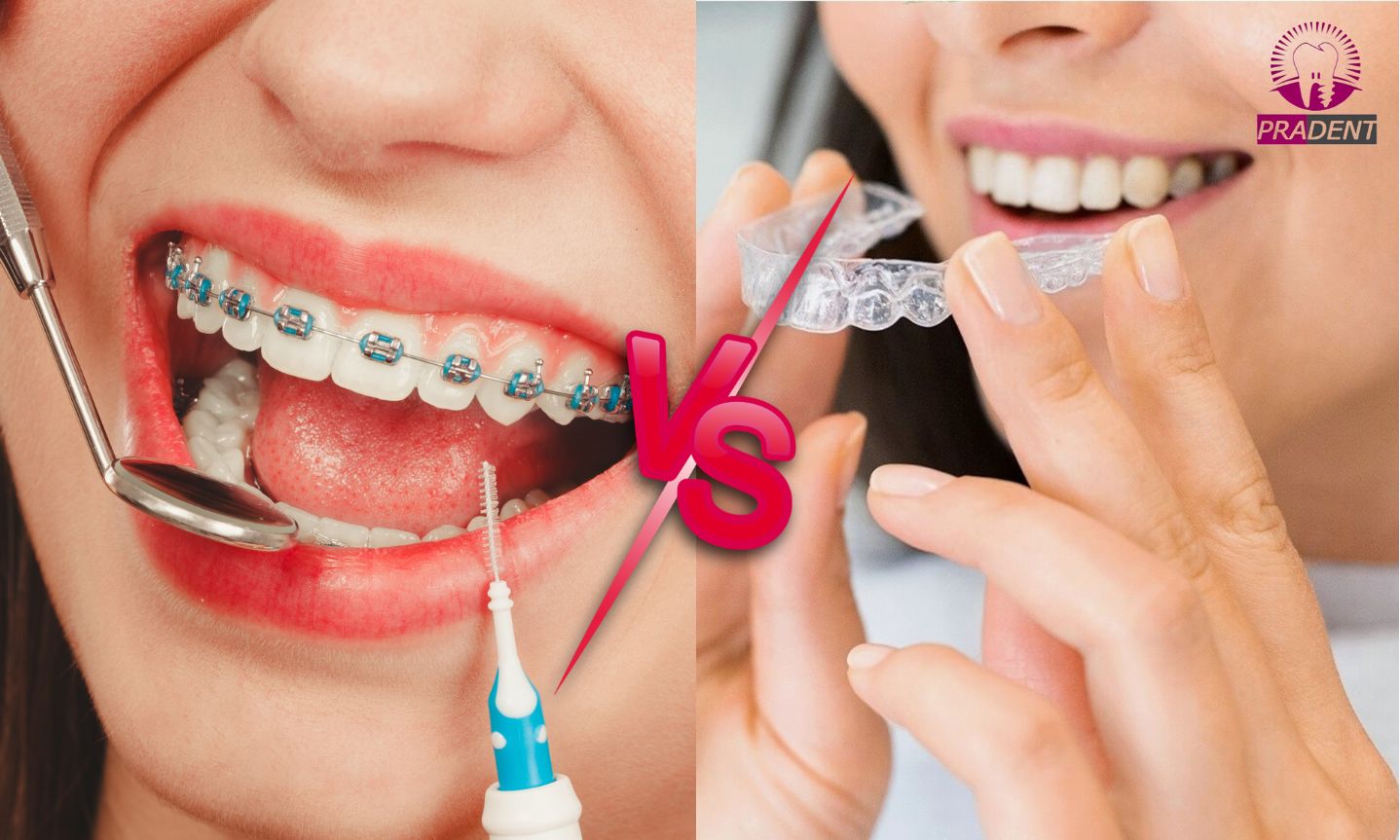
Metal braces are the traditional, time-tested method for straightening teeth. They consist of metal brackets affixed to your teeth and connected by wires that are periodically adjusted to shift teeth into proper alignment.
Variants of Metal Braces:
- Ceramic Braces: Tooth-colored brackets for a more discreet appearance.
- Lingual Braces: Attached to the inner surfaces of teeth, hidden from view.
What Are Clear Aligners?
Clear aligners are removable, transparent plastic trays custom-designed to fit over your teeth and gradually move them into alignment. Popular brands include Invisalign, Eon Aligner, and ClearCorrect.
Aligners are replaced every 1–2 weeks and must be worn for 20–22 hours a day to be effective.
Braces vs. Aligners: A Detailed Comparison
1. Aesthetics
- Braces: Visibly metallic, though ceramic options can help camouflage them.
- Aligners: Nearly invisible; ideal for professionals, teens, or anyone conscious about appearance.
Winner: Aligners
2. Comfort
- Braces: May cause mouth ulcers or discomfort due to metal parts.
- Aligners: Made of smooth plastic, more comfortable but may cause mild pressure initially.
Winner: Aligners
3. Oral Hygiene
- Braces: Difficult to clean around brackets and wires; require special tools.
- Aligners: Removable, allowing you to brush and floss normally.
Winner: Aligners
4. Effectiveness
- Braces: Highly effective for all case complexities, including severe misalignment, crossbites, or impacted teeth.
- Aligners: Suitable for mild to moderate cases, but with the right expertise and attachments, even complex cases can be treated.
Winner: Tie (case-dependent)
5. Convenience & Follow-ups
- Braces: Monthly dental visits required for adjustments.
- Aligners: Fewer clinic visits; digital monitoring possible for simple cases.
Winner: Aligners
6. Dietary Restrictions
- Braces: No hard, sticky, or chewy foods to avoid damage.
- Aligners: No restrictions—just remove them while eating or drinking.
Winner: Aligners
7. Compliance Requirement
- Braces: Fixed—no patient discipline required.
- Aligners: Removable—require 22 hours of daily wear. Non-compliance can delay results.
Winner: Braces (for forgetful patients)
8. Treatment Duration
- Braces: Typically 18–24 months.
- Aligners: Often faster (8–18 months), depending on case complexity and compliance.
Winner: Aligners (in many cases)
9. Cost
- Braces: More affordable (₹35,000–₹60,000 at Pradent).
- Aligners: Higher cost (₹60,000–₹1,20,000 depending on brand and treatment length).
Winner: Braces (budget-conscious option)
Common Orthodontic Problems Treated
Both braces and aligners can treat the following conditions:
- Crowding
- Spacing
- Crossbite
- Overbite/Deep bite
- Open bite
- Midline shift
- Rotated or impacted teeth (best treated with braces or advanced aligners under expert care)
Factors to Consider When Choosing Between Braces and Aligners
✅ Age & Lifestyle
Adults or working professionals may prefer aligners for aesthetic reasons, while children and teens may benefit from fixed braces to ensure consistent wear.
✅ Case Complexity
For severe alignment issues or jaw discrepancies, braces are often the more predictable solution.
✅ Personal Discipline
Clear aligners require strict compliance. If you forget to wear them or take them out frequently, your treatment may be delayed.
✅ Budget
Braces are generally more cost-effective, making them a practical option for students or budget-conscious families.
✅ Desired Treatment Time
Aligners can offer quicker results for simpler cases and are a great choice if you’re preparing for an important life event like a wedding or a job interview.
Why Choose Pradent Dental Clinic, Katraj, Pune?
Dr. Prachi Adsul, a highly skilled MDS Orthodontist, leads every treatment at Pradent Dental Clinic with precision and compassion. Here’s why hundreds of patients trust us for their smile transformation:
🌟 Expertise You Can Trust
Dr. Prachi Adsul has years of experience in treating patients with both conventional braces and modern clear aligners.
🌟 Personalized Treatment Planning
We use the latest digital scanning and treatment planning technologies to craft a solution uniquely tailored to your dental anatomy.
🌟 Affordable Packages
We offer flexible payment plans and competitive pricing, ensuring quality orthodontic care is accessible to all.
🌟 Transparent Consultation
During your consultation, we thoroughly assess your dental condition and help you choose the best orthodontic treatment based on your goals, lifestyle, and budget.
Real Results, Real Smiles
Here at Pradent, our patients’ transformations speak for themselves. Whether you’re looking for invisible alignment with clear trays or reliable corrections with braces, our goal is the same: a healthy, beautiful smile that lasts a lifetime.
Frequently Asked Questions (FAQs)
Q1: Are clear aligners better than braces?
A: Clear aligners are more aesthetic and convenient, but braces are often more suitable for complex dental issues. The best treatment depends on your specific case.
Q2: How long will my treatment take?
A: Braces usually take 18–24 months, while aligners can take 8–18 months depending on case complexity and patient compliance.
Q3: Are aligners painful?
A: Aligners may cause mild pressure initially but are generally more comfortable than braces.
Q4: Do I need to visit the clinic frequently?
A: Braces require monthly adjustments, whereas aligner follow-ups are usually every 6–8 weeks.
Q5: Can teenagers use aligners?
A: Yes, teens can use aligners, but only if they’re disciplined enough to wear them consistently.