Why Early Orthodontic Checkups for Kids Are So Important
By Dr. Prachi Adsul (MDS Orthodontist), Pradent Dental Clinic, Katraj & Ambegaon
Every parent dreams of seeing their child grow up with a healthy, confident smile. While many associate braces and orthodontic treatment with teenagers, the truth is that the foundation for a beautiful smile is often laid much earlier.
According to the American Association of Orthodontists (AAO), children should have their first orthodontic checkup by age 7. At this age, orthodontists can identify potential problems with jaw growth and emerging teeth — even if the child still has baby teeth.
At Pradent Dental Clinic, led by Dr. Prachi Adsul, we believe that early orthodontic evaluation is one of the smartest steps a parent can take to protect their child’s oral health and set the stage for a confident smile.
🧒 1. Why Age 7 is the Magic Number
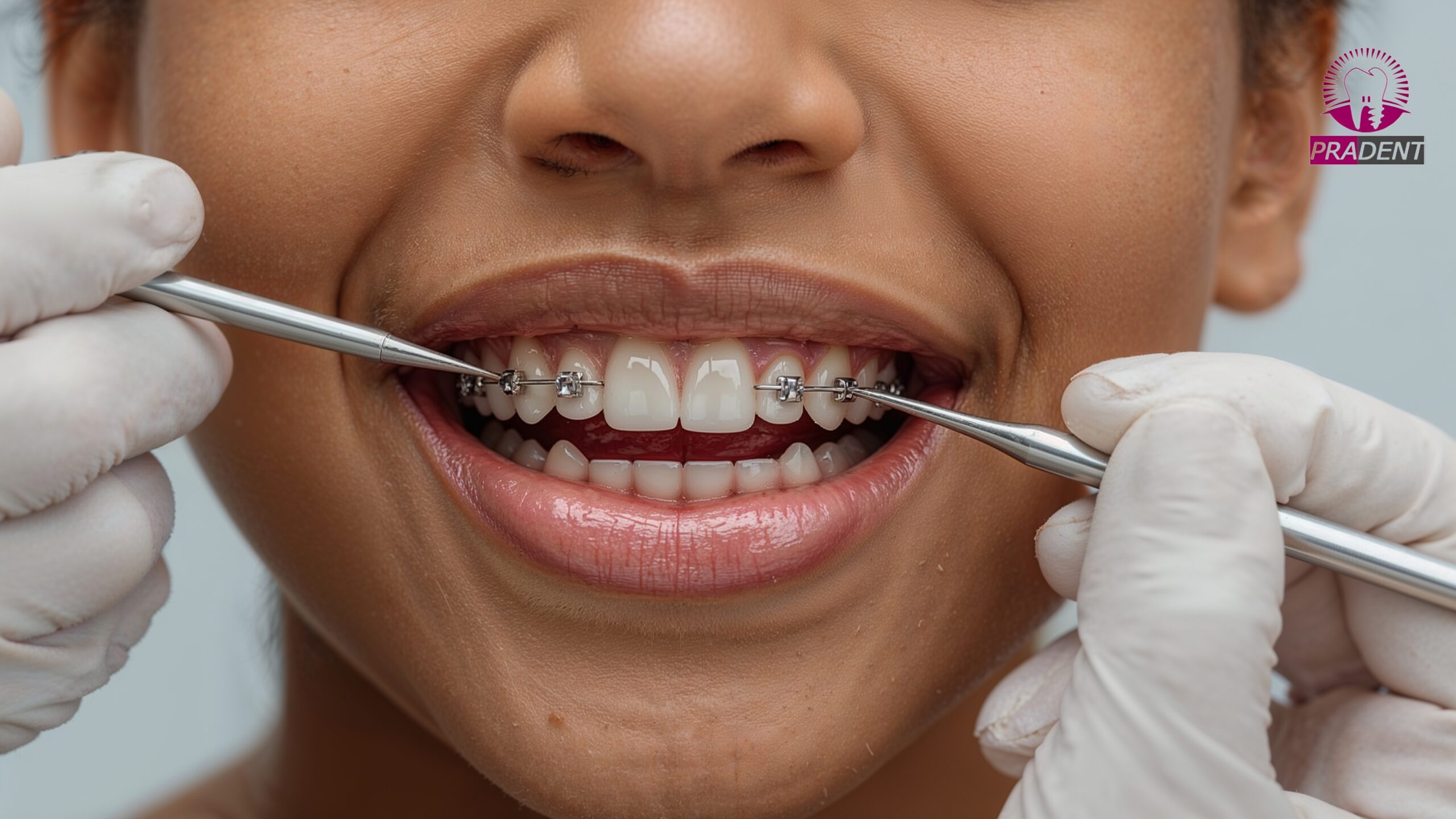
By age 7, most children have a mix of baby teeth and permanent teeth, including their first molars. This gives orthodontists a clear view of:
- How teeth are erupting
- How the upper and lower jaws are growing
- If there are any developing crowding, spacing, or bite issues
At this stage, your child may not need braces immediately. However, an orthodontic checkup allows Dr. Prachi to identify problems early and decide if interceptive treatment (early orthodontic intervention) is required — or if regular monitoring will be enough.
👉 Key takeaway: Early evaluation doesn’t always mean early treatment, but it ensures that treatment, if needed, happens at the right time for best results.
💡 2. Problems That Can Be Detected Early
Many orthodontic issues are easier to correct while a child is still growing. Detecting them early can prevent complicated treatments later. Some of the common problems identified during early checkups include:
- Crowding or spacing issues
- Crossbite (upper teeth fitting inside lower teeth)
- Overbite or deep bite (upper teeth overlap lower teeth excessively)
- Underbite (lower jaw protrudes ahead of upper jaw)
- Open bite (gap between upper and lower teeth when biting)
- Thumb sucking or tongue thrusting habits causing misalignment
- Early or late loss of baby teeth impacting permanent eruption
When these problems are caught early, interceptive orthodontics can guide jaw growth, create space for erupting teeth, and reduce the need for tooth extractions or surgeries later.
🦷 3. Benefits of Early Orthodontic Evaluation
✅ 1. Guides Jaw Growth and Tooth Eruption
With early intervention, orthodontists can influence jaw development while it’s still flexible. This ensures teeth erupt in their proper positions and reduces severe misalignments.
✅ 2. Reduces Treatment Complexity Later
Addressing minor issues early can prevent major orthodontic problems in the teenage years. This can reduce the need for extractions, surgical interventions, or long treatment durations later.
✅ 3. Helps Break Harmful Oral Habits
Habits like thumb sucking, prolonged pacifier use, or tongue thrusting can cause misalignment. Early checkups help identify these habits and provide solutions before they cause lasting damage.
✅ 4. Improves Facial Balance and Smile Aesthetics
Jaw discrepancies, if corrected early, help in achieving proper facial balance and harmony. This can significantly improve a child’s appearance and self-esteem as they grow.
✅ 5. Boosts Confidence Early On
Children with visibly misaligned teeth may feel self-conscious. Early orthodontic intervention helps improve their smile aesthetics and confidence during crucial developmental years.
✅ 6. Saves Time and Cost in the Long Run
Early detection and intervention often mean shorter, less invasive, and more cost-effective treatments compared to treating severe issues later in life.
🧠 4. What Happens During a Child’s First Orthodontic Visit at Pradent?
At Pradent Dental Clinic, we make the first orthodontic visit a fun and stress-free experience for kids. Here’s what typically happens:
- Comprehensive Evaluation
- Dr. Prachi examines the child’s teeth, jaws, and bite.
- Digital X-rays and intraoral scans are taken if required to get precise visuals.
- Growth & Eruption Assessment
- The child’s dental and skeletal growth is assessed to determine if any intervention is needed.
- Personalized Plan or Monitoring
- If no treatment is required, periodic checkups are scheduled to monitor growth.
- If issues are found, an interceptive treatment plan is suggested.
- Parent Guidance
- Parents receive detailed explanations, visual aids, and tips to maintain their child’s dental health.
✨ This proactive approach ensures that treatment, if required, begins at the ideal time, leading to better and faster results.
🦷 5. What is Interceptive Orthodontic Treatment?
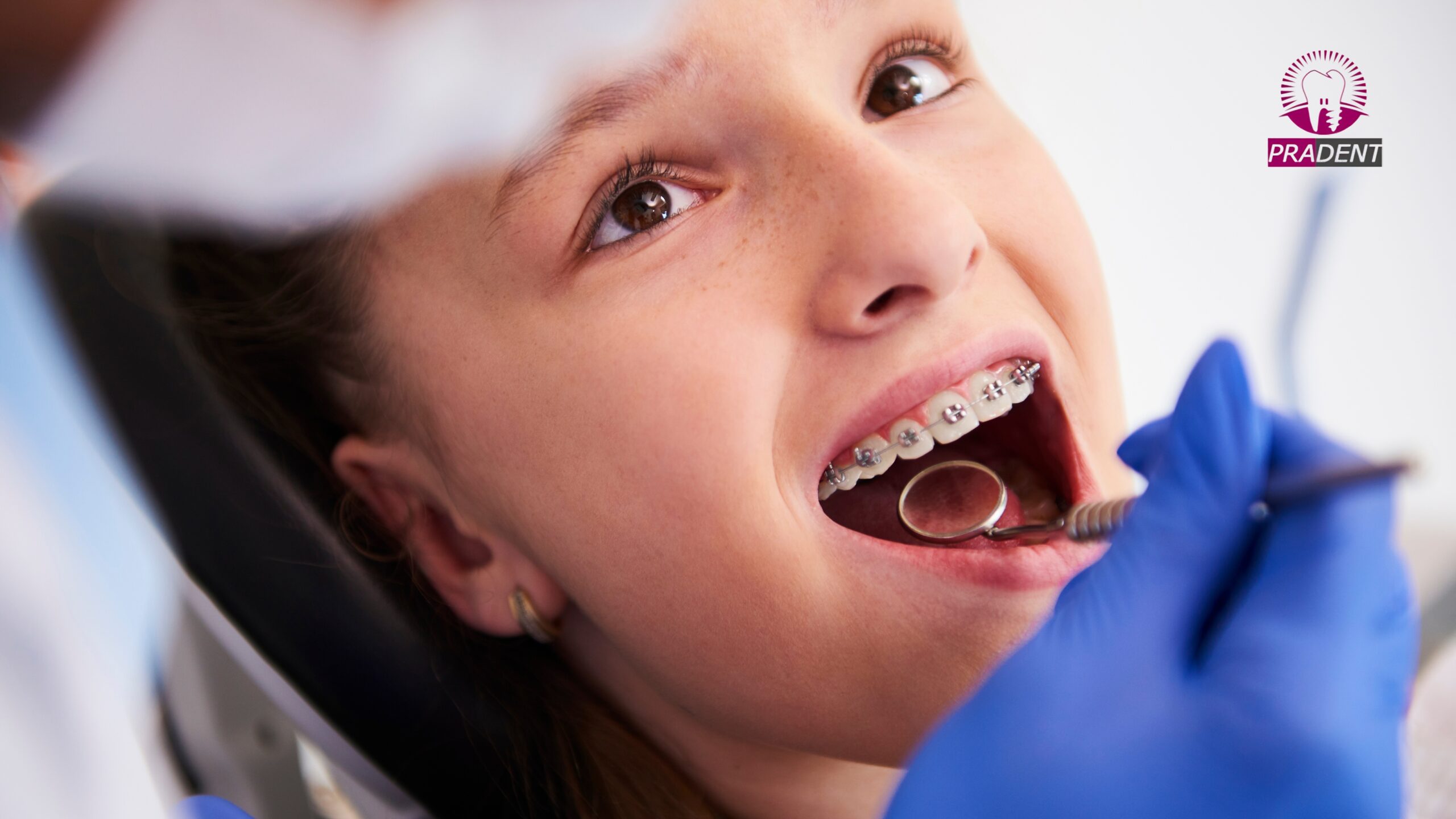
Interceptive orthodontics, also called Phase 1 treatment, involves correcting dental and skeletal issues while the child is still growing. It usually occurs between ages 7 to 10 and can involve:
- Palatal expanders (to widen narrow arches)
- Partial braces on select teeth
- Space maintainers
- Habit-breaking appliances (for thumb sucking or tongue thrusting)
- Minor tooth movement devices
Goal of interceptive treatment:
- Create proper space for permanent teeth
- Guide jaw growth
- Prevent worsening of malocclusion
- Reduce future orthodontic treatment time
After Phase 1, some children may need a Phase 2 treatment (like full braces or aligners) during their teenage years. However, this second phase is often shorter and simpler because early intervention has already done the groundwork.
🪄 6. Signs Your Child May Need an Early Orthodontic Checkup
Parents should watch out for these signs and consult an orthodontist early if they notice:
- Early or late loss of baby teeth
- Difficulty in chewing or biting food
- Crowded, crooked, or misaligned teeth
- Thumb sucking or tongue thrusting beyond age 5
- Teeth that don’t meet properly when biting
- Mouth breathing habit
- Speech difficulties due to dental misalignment
- Protruding front teeth
Even if your child doesn’t show these signs, a checkup around age 7 is still recommended for a thorough evaluation.
👩⚕️ 7. Why Choose Pradent Dental Clinic for Your Child’s Orthodontic Care?
Choosing the right orthodontist is crucial for your child’s smile. At Pradent Dental Clinic (Katraj & Ambegaon), we offer:
- 🦷 Specialized Expertise – Led by Dr. Prachi Adsul (MDS Orthodontist) with years of experience in early orthodontics.
- 💻 Advanced Technology – Intraoral scanners, digital X-rays, and precision diagnostic tools for accurate planning.
- 🌟 Comfortable Environment – Kid-friendly setup that makes dental visits stress-free.
- 🧼 High Hygiene & Safety – Strict sterilization protocols for every patient.
- 👨👩👧👦 Family Dental Care – One trusted clinic for children, adults, and seniors alike.
- 📝 Personalized Plans – Transparent communication and treatment tailored to each child’s needs.
🎉 8. Early Checkups = Lifelong Confident Smiles
Your child’s smile is a lifelong asset. By scheduling early orthodontic evaluations, you’re not just correcting teeth — you’re investing in their confidence, comfort, and oral health for years to come.
Festive seasons, school functions, family photos — every moment becomes brighter when your child smiles confidently.
📍 Visit Pradent Dental Clinic – Katraj & Ambegaon, Pune
Pradent is your trusted family dental clinic offering:
- Early orthodontic checkups for kids
- Braces and Invisalign
- Laser gum treatments
- Smile designing & zirconia crowns
- Painless root canals & implants
Led by Dr. Prachi Adsul, we combine modern technology with compassionate care to give every child a healthy, beautiful smile.
✨ Conclusion
Early orthodontic checkups give your child the best chance at a healthy, beautiful smile with minimal intervention later. Age 7 is not too early — in fact, it’s the perfect time to spot problems, guide growth, and ensure a confident future.
At Pradent Dental Clinic, we are committed to providing ethical, advanced, and child-friendly orthodontic care.
📞 Book your child’s early orthodontic evaluation today at our Katraj or Ambegaon branch and take the first step toward a lifetime of confident smiles.